
How Pop Songs Become Jazz Arrangements | Behind the Music
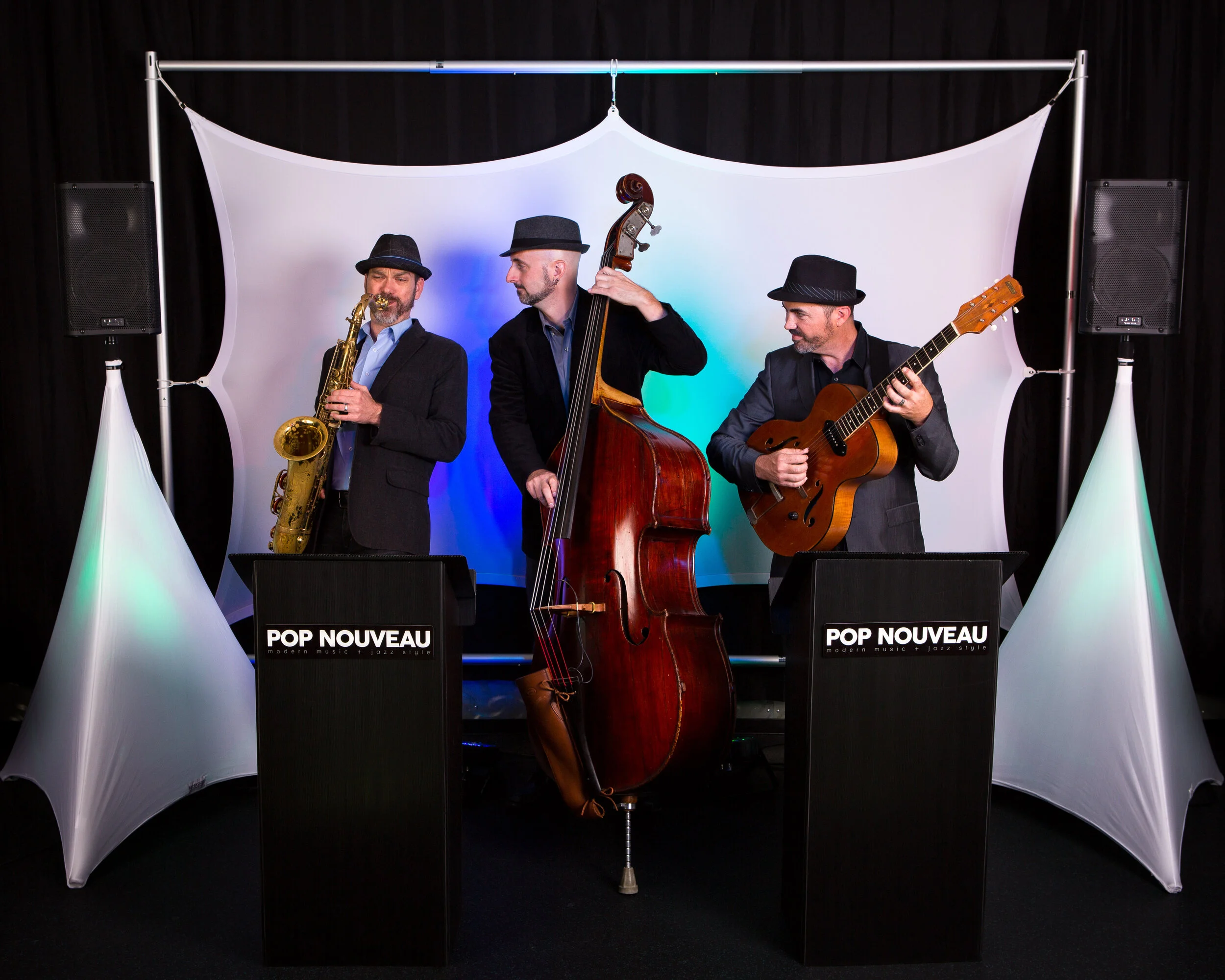
There's a half-second delay that happens at almost every event we play. Our trio starts a tune, guests keep talking, and then someone's head comes up. They know this song. They've just never heard it do this before.
That pause is the whole point of what we do. But turning a modern pop hit into a jazz arrangement isn't as simple as playing it slower with a walking bass line. Here's what actually goes into it.
Not every song makes the trip
The first question is whether the melody can survive without the production.
A lot of contemporary pop is built on sound design — the synth patch, the vocal processing, the drop. Strip that away and there isn't much of a song left underneath. Other tracks have a melody strong enough to carry itself on a saxophone or a vocalist with nothing but a rhythm section behind them.
That's the test. If we can hum it unaccompanied and it still sounds like something, it can become a jazz chart. If it can't, no amount of arranging will save it.
Choosing the feel
Once a song passes, we decide what era and groove it belongs in. This is the single biggest decision in the arrangement, and it changes the emotional meaning of the song entirely.
A driving, four-on-the-floor dance track slowed to a bossa nova stops being a party song and becomes something intimate. A quiet ballad pushed into an uptempo swing becomes flirtatious. The same lyric can read as heartbreak or as a wink depending on nothing but tempo and groove.
For events, this matters more than it might seem. The feel we choose determines whether a song works during dinner or during the last hour of the reception.

Rebuilding the harmony
Most pop songs cycle through three or four chords. That repetition is a feature — it's what makes them stick.
Jazz harmony works differently. We keep the melody the audience recognizes and rebuild what sits underneath it: passing chords, substitutions, and turnarounds that give the progression somewhere to go. The listener still hears the tune they know. The ground has just shifted under it.
This is the part that creates the double-take. Familiar on top, unfamiliar underneath.
Arranging for the room, not the recording
A concert arrangement and an event arrangement are different animals.
At an event, the same chart has to work at three different volumes across one night. During cocktail hour it needs space and restraint — solos stay short, dynamics stay under conversation. By the reception, that same song opens up: longer solos, more horn, a heavier backbeat.
We build that flexibility into the arrangement from the start rather than improvising it on the spot. It's why a trio can play a room without ever overpowering it, and why the same group can lift the energy two hours later.
Why it matters for your event
Guests hear background music at every event they attend. Most of it never registers.
What registers is recognition — a melody someone knows arriving in a form they didn't expect. It pulls people into the room instead of letting them tune out. For a wedding, a gala, or a corporate reception in Southern California, that difference is the reason planners keep booking live music instead of a playlist.
If you're curious what your favorite song sounds like reimagined this way, we're always happy to take requests. Take a look at our song list, or get in touch about an upcoming date.