
What a Band Notices That Nobody Else Does

Every vendor at an event sees a slice of it. The photographer follows the people. The caterer works the timeline. The coordinator is three steps ahead of everyone, usually in a hallway.
We're the only ones facing the whole room for hours straight.
It's an unusual vantage point. You can't talk to anyone, you can't leave, and you have nothing to do but watch while you play. After enough events, you start noticing things that aren't on anyone else's list.
The room turns at a specific moment
Most events have a single minute where the energy shifts, and it's almost never the one on the timeline.
It isn't the first dance or the toast. It's something smaller — a group that had been standing politely sits down together, or two tables that didn't know each other start talking. The volume in the room changes before anything official happens. You can hear it from the stage before you can see it.
Once that shift happens, the event takes care of itself. Before it happens, no amount of programming forces it.
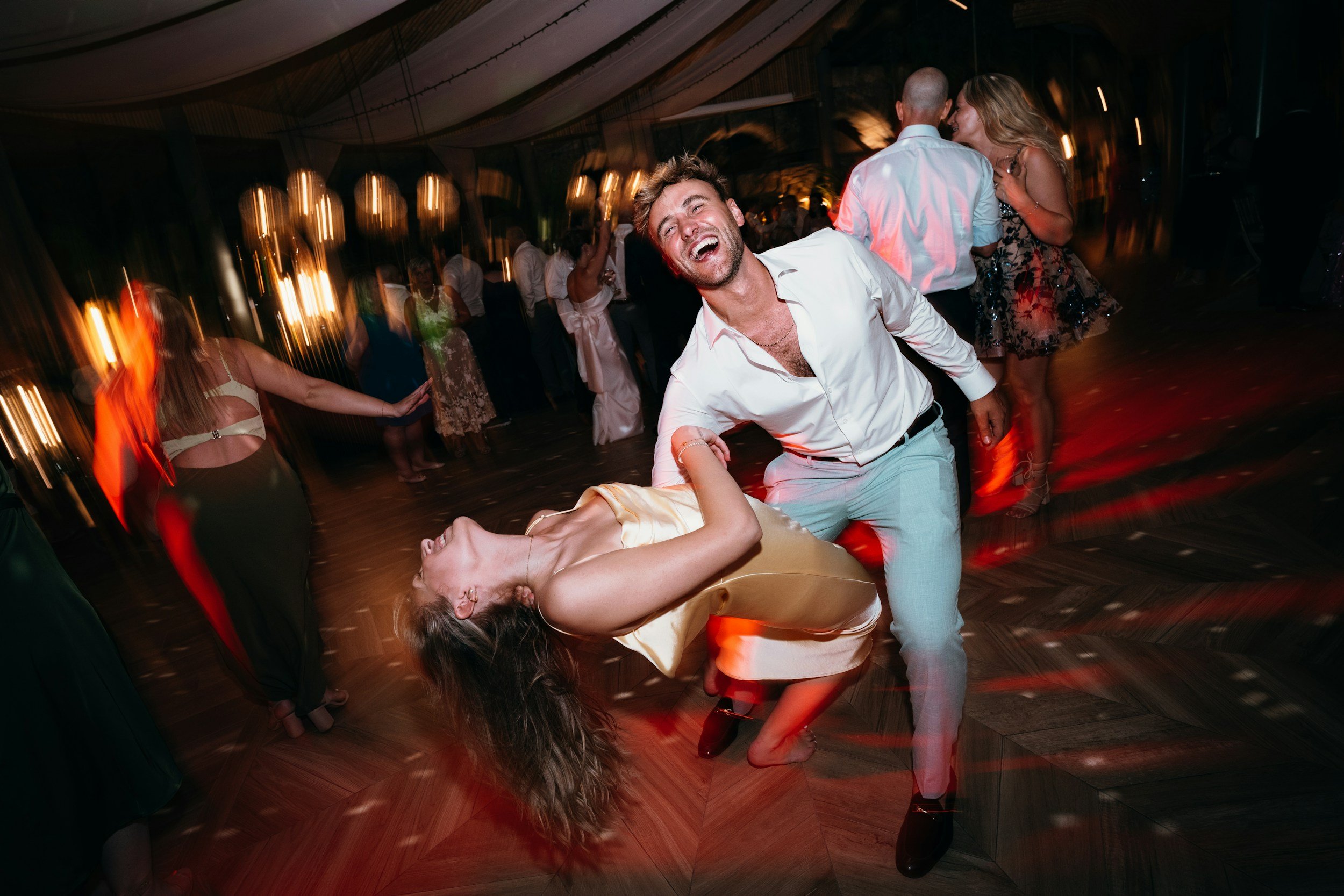
The best time isn't being had on the dance floor
The dance floor is the loudest part of the room, so it gets the attention and most of the photos.
But the people genuinely enjoying themselves are often at a table off to the side, two drinks in, having a conversation they weren't expecting to have. They never get up. They stay until the end.
From the stage, you can see both at once, and it changes what you think a successful event looks like. A packed dance floor is one kind of good night. A room full of people who don't want to leave is another, and it's the harder one to engineer.
Somebody is always working
Guests see a finished event. We see the machinery.
The coordinator who hasn't sat down since noon. The catering team running a flawless service in a space with no real kitchen. The photographer backing into exactly the right position without anyone noticing them do it.
Guests experience the result. We watch the work, because we're stationary and they keep moving past us. It's the part of the industry nobody photographs.
The moments between the moments
Events are built around big scheduled beats. What sticks tends to happen in the gaps.
A parent watching from the edge of the room without saying anything. Two friends stepping outside for air and staying out there a while. Somebody standing still in the middle of everything, taking it in.
Nobody plans these. They're what people describe weeks later when they talk about the night, and they're almost always unphotographed.
What we do with all of it
This isn't just people-watching. It's the job.
Reading a room is how a band decides whether to pull back or push, stretch a set or tighten it, hold the energy steady through dinner or start lifting it. The decision comes from watching, not from a plan made in advance.
It's why live music behaves differently than a playlist. A playlist can't tell that the room went quiet. We can, and we respond to it in real time.
That's most of what you're hiring when you hire a band — not a repertoire, but a group of people paying close attention to your event while it happens.