
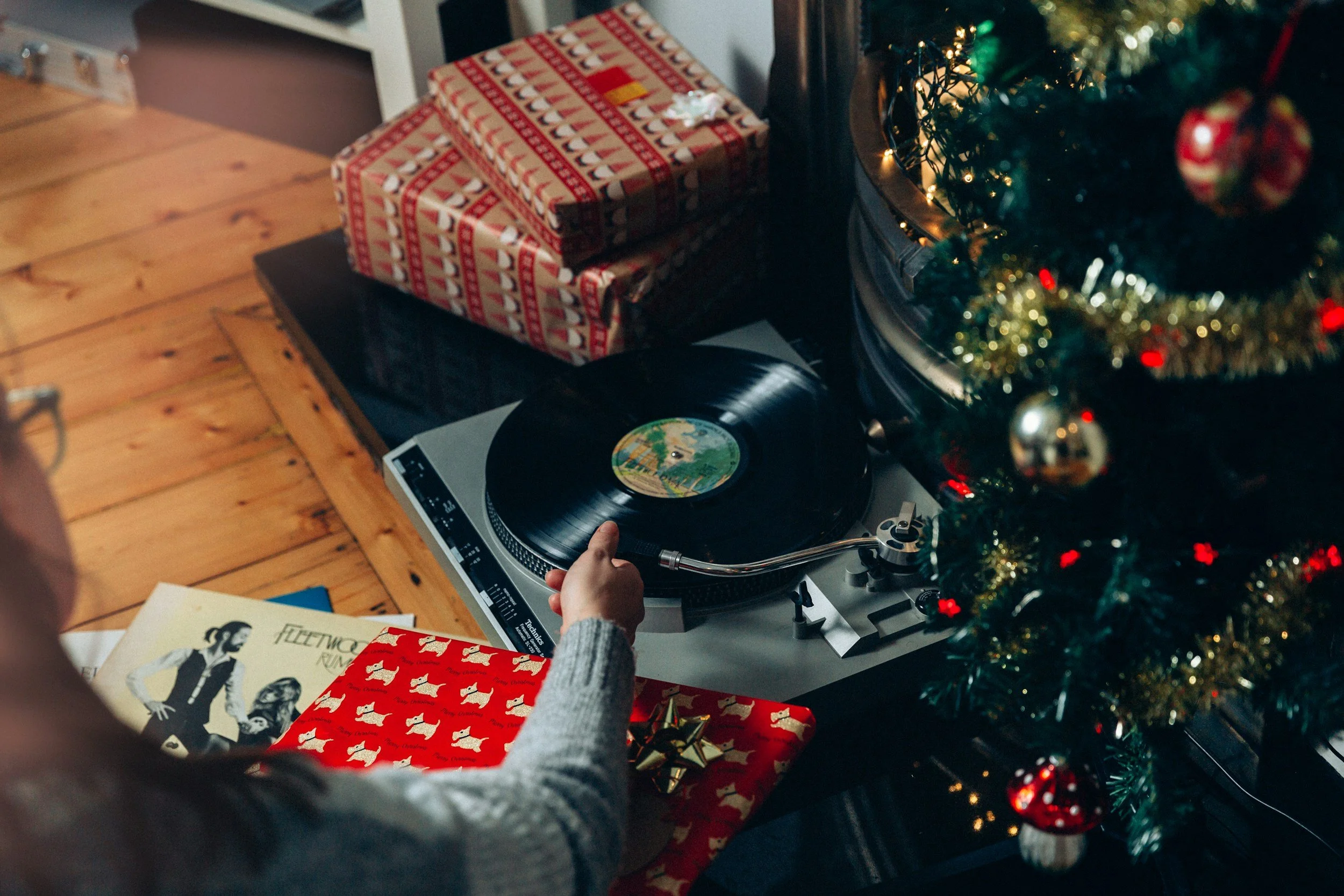
The most-played Christmas song in America was first recorded by a jazz trio.
In June 1946, Nat King Cole cut "The Christmas Song" with the King Cole Trio — piano, guitar, bass. The strings everyone pictures came later, at Cole's insistence and over his label's objections. The version most people know today is from 1961.
That order matters. The jazz version wasn't a reinterpretation of the Christmas standard. It was the Christmas standard, before anyone thought to make it grand.
The songs were written by the same people who wrote the standards
Look at who actually built the December canon.
"White Christmas" is Irving Berlin. "Let It Snow" is Sammy Cahn and Jule Styne, who wrote half of Sinatra's catalog. "Have Yourself a Merry Little Christmas" is Hugh Martin, from a 1944 MGM musical. "The Christmas Song" is Mel Tormé, who was a working jazz singer first and a songwriter second.
These aren't carols. They're American popular songs from the same writers, the same publishing houses, and the same two decades as "Someone to Watch Over Me" and "I've Got You Under My Skin." They have the harmonic structure of standards because that's what they are.
And they were written fast, for work
Tormé wrote "The Christmas Song" in July, during a heat wave, trying to cool off by thinking about winter. His partner had four lines on a pad. The whole thing took about forty-five minutes.
That's worth knowing, because it's easy to treat this music as something handed down rather than something made. It was product — written quickly by professionals who needed a song, aimed at singers who needed material. Nobody involved thought they were building a shrine.
They were never meant to stay fixed
In 1957, Frank Sinatra asked Hugh Martin to rewrite part of "Have Yourself a Merry Little Christmas." The original line was resigned — a hope that things might get better later. Sinatra wanted the song in the present tense, so Martin gave him the line about hanging a shining star on the highest bough.
Martin just rewrote it. That's the lyric nearly everyone sings now.
The canon was working repertoire, revised by whoever was performing it. Which is the strongest argument against treating these songs as museum pieces: the people who made them never did.
Not everything in December comes from this tradition
Being straight about it: plenty of holiday music has nothing to do with jazz.
The rock-era novelties — "Jingle Bell Rock," "Rockin' Around the Christmas Tree" — come from somewhere else entirely, and forcing them into swing tends to sound like a joke. The sacred carols are centuries older and belong to a different lineage. We play some of both, but we treat them as arrangements rather than as native material.
The mid-century American songs are different. Those we don't have to adapt. We play them the way they were built.
What that means for a December event
A jazz group in December isn't a themed novelty act. It's the closest thing to how this music sounded when it entered the culture — written by songwriters, recorded by small groups, performed by singers who changed it as they went.
It also means these songs sit naturally next to everything else in a set. The gap between a holiday standard and the rest of our repertoire is small, because the writing came from the same place. A December set can move between them without anyone noticing a seam.
If you have a December date in Southern California, we'd love to hear about it. Get in touch and tell us what you're planning.